
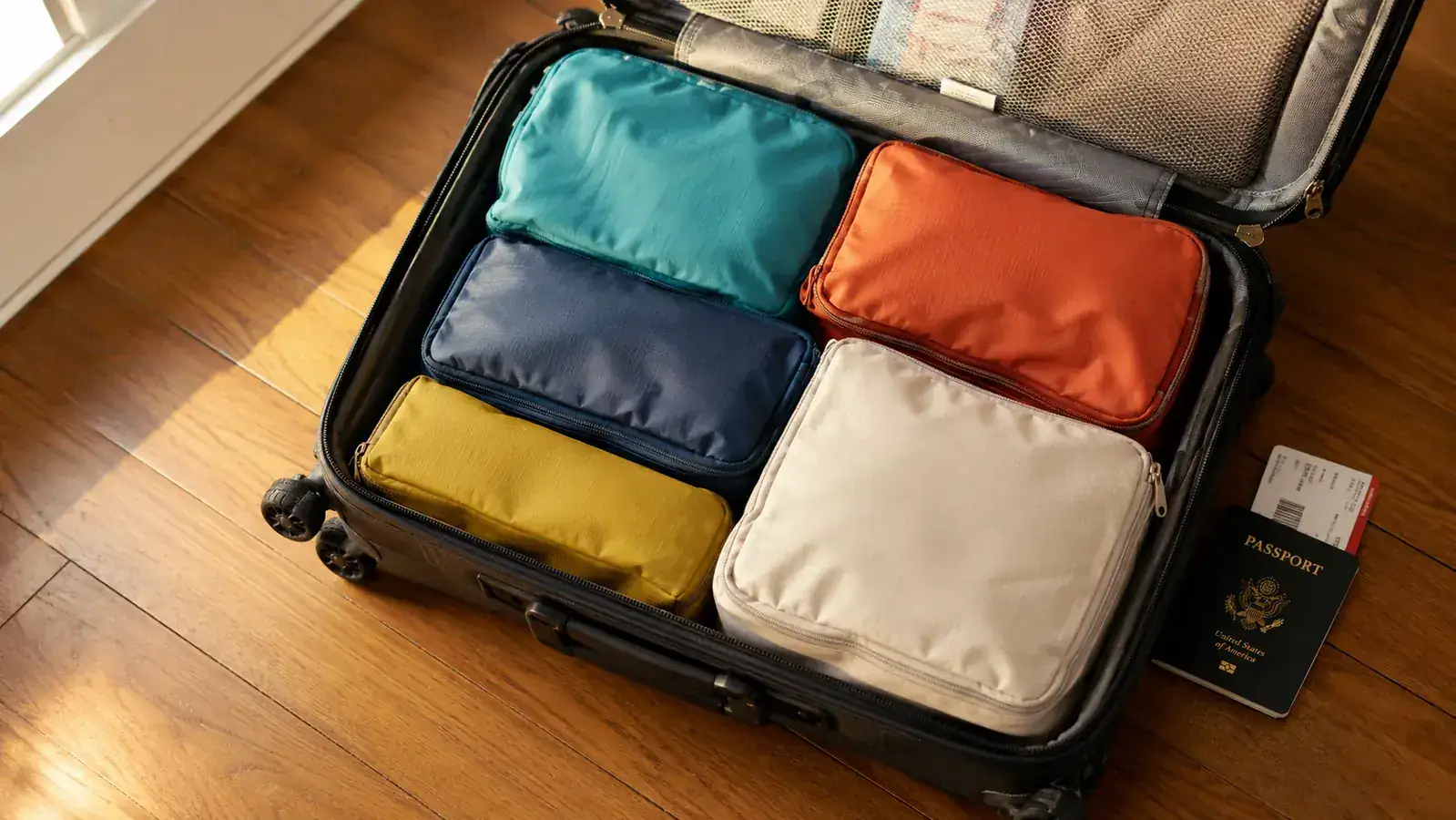
Eight months ago I was standing at a gate in Atlanta with a rollaboard that would not latch. I had spent twenty minutes trying to mash a week of clothes into a 22-inch bag, and the zipper was threatening to quit on me. The woman sitting next to me pulled out a set of Veken compression cubes, loaded her bag in about four minutes flat, and laughed when she saw my face. She had been using them for two years on weekly work trips between Tampa and Chicago. I bought the Veken 9-piece compression set on my phone before we boarded. That was 30-plus trips and eight months ago, and I have not checked a bag since.
I want to be straight with you. I have tried four other packing cube brands before the Veken set, including two with compression claims that turned out to be marketing noise. So I went into this skeptical, and I am going to give you the full picture: the good, the parts that surprised me, and the one thing about the medium cubes that nobody seems to mention.
The Quick Verdict
The Veken compression cubes deliver real, measurable compression that lets most travelers cut a full checked bag down to a carry-on. Eight months in, the zippers and mesh are holding up. The only catches are that the medium cube runs small, and you need a consistent folding technique to get full benefit from the compression layer.
Amazon Check Today's Price →Still fighting with a stuffed suitcase every Sunday night? These cubes fixed that for me.
The Veken 9-piece compression set is currently available on Amazon. At under $22 for the full set, it costs less than a single checked bag fee on most domestic routes.
Amazon Check Today's Price on Amazon →How I Have Been Using Them
My baseline: I fly two to three times a month, usually domestic, occasionally an international run. Trips range from two nights to ten days. I am a medium-sized person who runs warm, so I pack more than the minimalists among you, and I tend to bring a mix of business casual and workout gear on every trip. The Veken set had to fit my actual life, not a Pinterest-perfect capsule wardrobe.
I carry an Away Carry-On (21.7 inches), and for trips of five days or fewer I skip the rollaboard entirely and use only a backpack plus the cubes. The two large cubes handle tops and bottoms, the medium takes workout clothes, the small cube handles socks and underwear, and the two slim compression cubes are where I put anything I want to keep wrinkle-free, like a blazer or a dress. The laundry and shoe bags in the set live in the exterior pocket when I am out exploring. The set also includes a toiletry bag, which I stopped using in favor of my existing dopp kit, but it is a clean bonus for anyone who does not already have one.
Over 30 trips I have run these through airline overhead bins, gate-checked them once on a regional jet, jammed them into rental car trunks, and left them in humid hotel rooms for days at a time. That is the real test, not a single unpacking session filmed for a YouTube channel. I also washed the cubes twice by hand after noticing they picked up a faint musty smell from a damp hotel room in Seattle. They came out fine and dried flat overnight.
The Compression Mechanism: Does It Actually Work?
The compression feature is what separates the Veken cubes from a standard packing cube, and it is worth explaining exactly how it works because a lot of reviewers skip this part. Each cube has two zipper tracks. The first zipper closes the cube normally, sealing the fabric compartment. The second zipper runs around the perimeter of the same cube and engages a compression layer that squeezes the contents down by forcing air out through a one-way valve panel on the bottom. You are not rolling them like compression bags and you do not need a vacuum. You zip, then zip again.
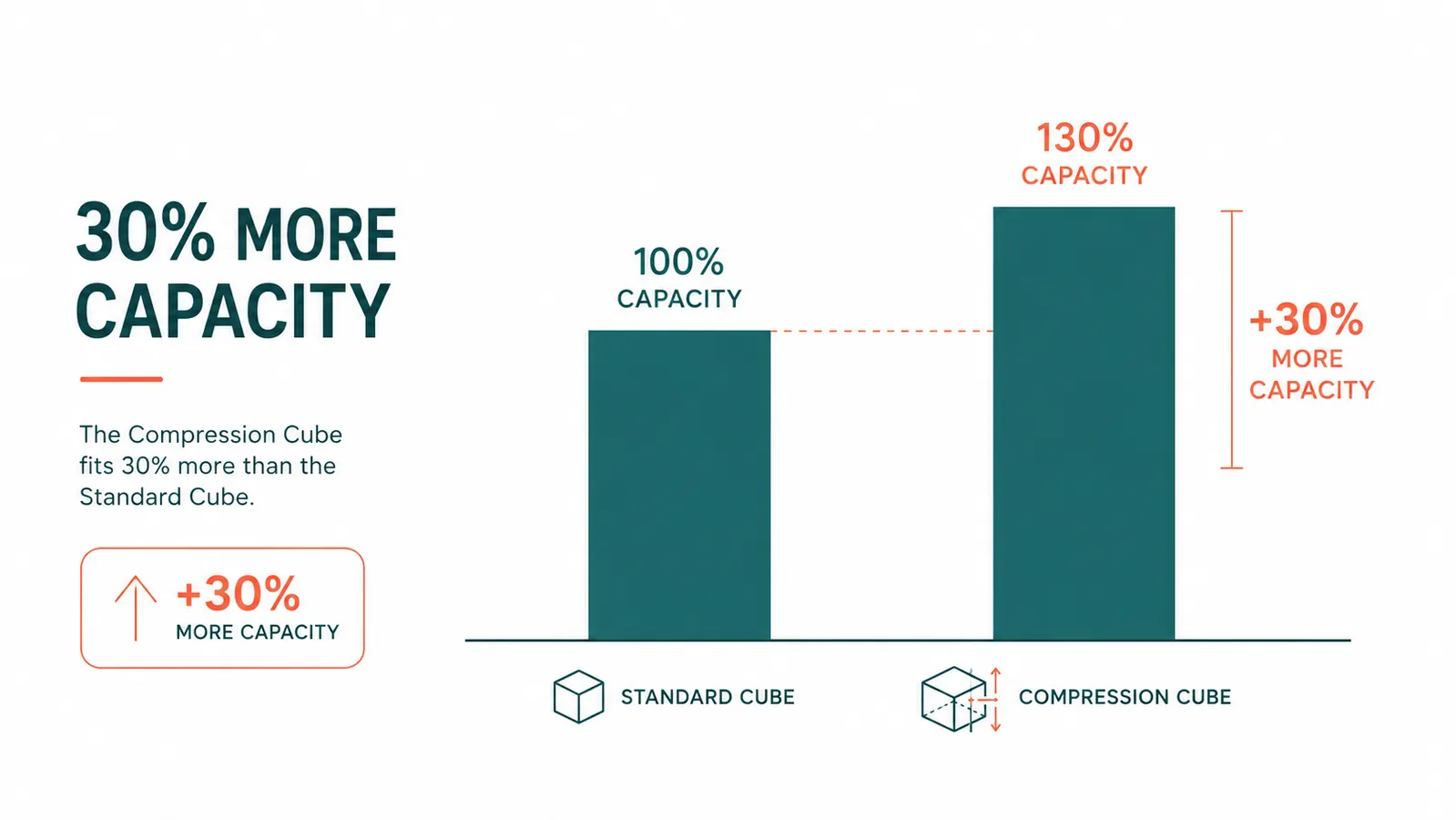
In practice, I can fit about 30 percent more into a fully compressed cube versus the same cube with only the first zipper closed. On the large cubes, that is meaningful. I tested this by packing seven medium-weight t-shirts plus two pairs of jeans into one large cube. Compressed, the cube sat flat and slid easily into my bag. Uncompressed, the same contents formed a dome that would not stack properly. If you want the full breakdown with a side-by-side packing test, I wrote a separate piece on compression packing cubes versus regular packing cubes that gets into the numbers.
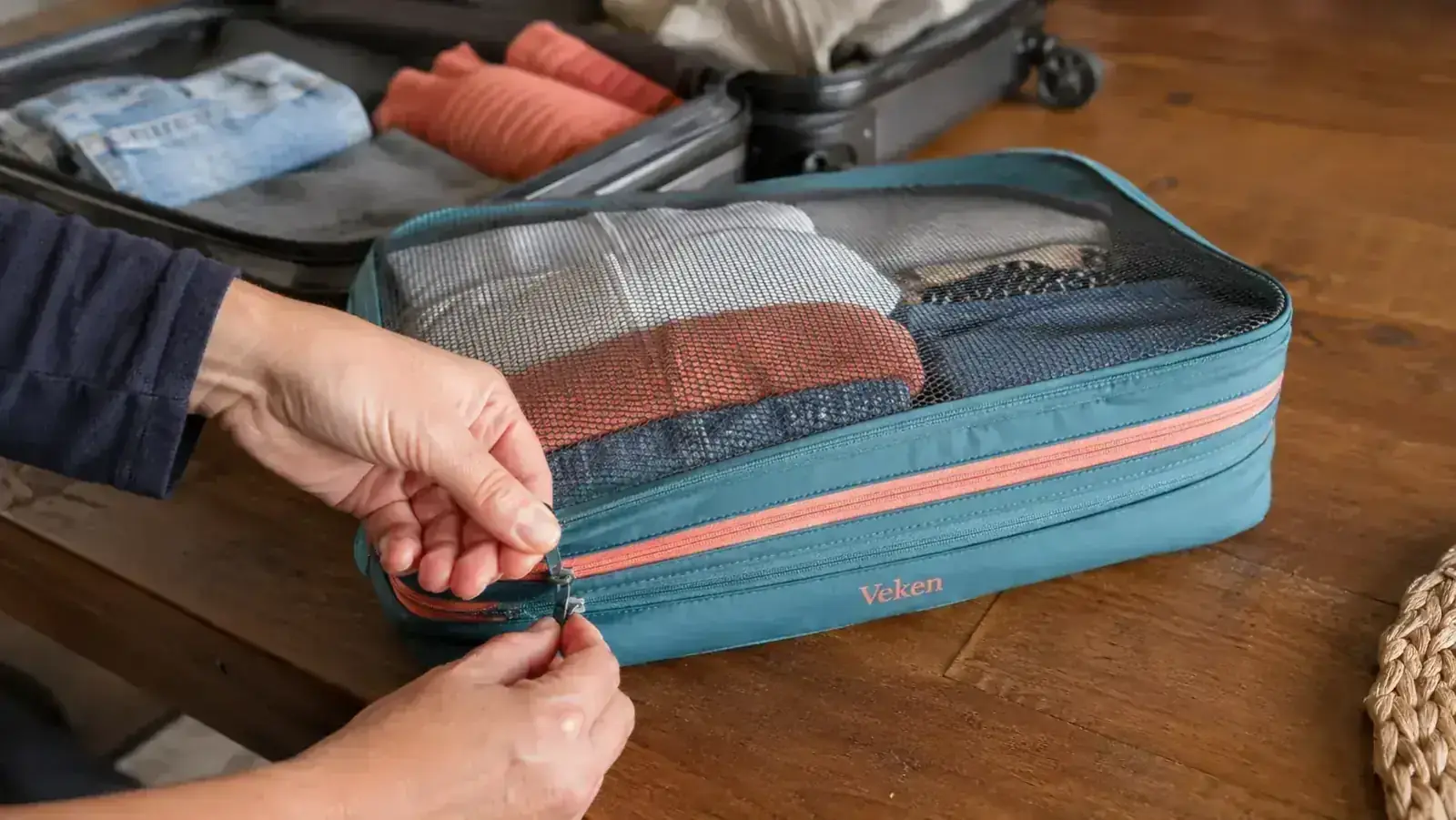
I fit seven t-shirts, two pairs of jeans, and a lightweight jacket into one large cube, fully compressed. My old standard cubes held about half that before doming out.
Durability After Eight Months of Heavy Use
This is where long-term reviews earn their keep. The zippers are the first thing I watch on packing cubes because that is almost always where cheaper sets fail, usually within the first ten uses. The Veken zippers have not skipped, snagged, or bent on any of the nine pieces in my set. The double-pull zipper handles on the compression layer feel slightly stiffer than the main compartment zippers, which makes sense given the resistance they work against, but they have not softened in a way that feels like wear. They feel the same as they did in month one.
The mesh tops show zero fraying. I was genuinely surprised by this because mesh is typically the weak point on budget cubes. The stitching at the corners, where stress concentrates during compression, looks clean. I have seen no fabric pilling, no delamination on the compression panel, and no odor retention even after being packed with gym clothes through a humid week in Florida in June.
The one thing I noticed: the compression valve panel on the bottom of the large cubes has a small amount of visible surface wear, like a slight scuff pattern from contact with my suitcase floor. It does not affect function at all, but if you are particular about cosmetic condition you would notice it around month four or five.
What the 9-Piece Set Actually Includes
Let me run through the set clearly because the naming on Amazon is a little confusing. The 9-piece version I have includes: two large compression cubes, two medium compression cubes, two slim compression cubes, one small cube for accessories, one laundry bag, and one shoe bag. There is also an 11-piece variant that adds a toiletry bag and a makeup bag if you want those included. I bought the 9-piece and added the toiletry bag separately, which was redundant in hindsight. If you do not already own a dedicated toiletry bag, go for the 11-piece. The size difference between the 9 and 11-piece sets is the same carry price on Amazon, so there is no financial reason to leave items out.
The slim compression cubes are the sleeper favorite in this set. They are flat, wide, and the compression layer keeps delicate fabrics from shifting during transit. I use them exclusively for clothes I want to arrive unwrinkled: a linen shirt, a blazer, a dress I am wearing the night I arrive. They work better than tissue paper for that job, and unlike a dry-cleaning bag they actually hold the garment in place instead of letting it slide around inside the suitcase.
What I Would Change: The Real Cons
The medium cubes run small. I do not mean a little small, I mean I genuinely use the medium cubes for things I would put in a small cube with any other brand. If you are planning to use the mediums for workout gear the way I initially did, you will probably end up moving workout gear to the large cubes and using the mediums for socks and underwear instead. This is a minor inconvenience once you recalibrate, but it caught me off guard in the first week.
The compression also requires consistent folding. If you stuff-and-hope the way most people pack a regular suitcase, the compression zipper will bulge and fight you. Once I started using the ranger-roll technique for shirts and fold-flat for pants, the compression layer worked exactly as advertised. This is a technique issue, not a product flaw, but it is worth knowing upfront. I have a full step-by-step guide in my article on how to pack two weeks in a carry-on using compression cubes if you want the exact method.
Finally, the colors are bold. The set I have is a teal and coral combination that looks great to me but might not be to everyone's taste. The set comes in several colorways, so check the dropdown before you order if you want something more neutral.
What We Liked
- Compression is real and measurable, around 30 percent more capacity per cube versus the uncompressed state
- Nine-piece set covers everything: clothes, shoes, laundry, and slim items in a single purchase
- Zippers and mesh have held up through 30-plus trips with zero failures or snags
- Slim compression cubes are genuinely excellent for keeping blazers and dresses wrinkle-free in transit
- At under $22 for the full set, the per-piece cost beats most competitors at this quality level
- 4.7-star average across more than 13,000 reviews suggests my experience is not an outlier
Where It Falls Short
- Medium cubes run noticeably small, closer to small-cube capacity from competing brands
- Compression requires consistent folding technique to work well; stuffing defeats it
- Compression valve panel shows cosmetic scuff wear by month four, though function remains unaffected
- Bold colorways only; travelers who prefer neutral, understated gear will need to look at the dropdown carefully
Who This Is For
The Veken compression cubes are the right call for anyone who flies more than four or five times a year and has ever paid a checked bag fee or stood at a gate hoping their carry-on squeezes into the sizer. They are especially good for one-bag travelers who want to stretch a single carry-on across five to seven days without wearing the same outfit twice. They also work well for frequent business travelers who need to show up to a meeting looking pressed, because the slim cubes handle that job better than anything else I have used at this price point. And they are a strong option for anyone who has been curious about packing cubes but never wanted to spend $50 or $60 on a premium set to find out if they would actually use them. You can get the full Veken set and find out for a fraction of that.
Who Should Skip It
If you are an ultra-light packer who already fits five days of clothes into a small backpack, you probably do not need compression cubes at all and the Veken set will feel like overkill. If you are exclusively checking bags and have no interest in going carry-on, the compression feature is solving a problem you do not have. And if you are the type of traveler who packs by stuffing until the bag closes, without folding, the compression layer will frustrate you until you adjust your method, and you may not want to make that adjustment. For everyone else, meaning the vast majority of travelers who want to pack smarter without becoming a minimalism zealot, the Veken set is one of the best-value buys in this category. I have recommended it to three people since that Atlanta gate encounter. All three have checked in to say they wish they had switched sooner. See also my rundown of 10 reasons compression cubes beat regular packing cubes for a quick reference if you are still weighing the decision.
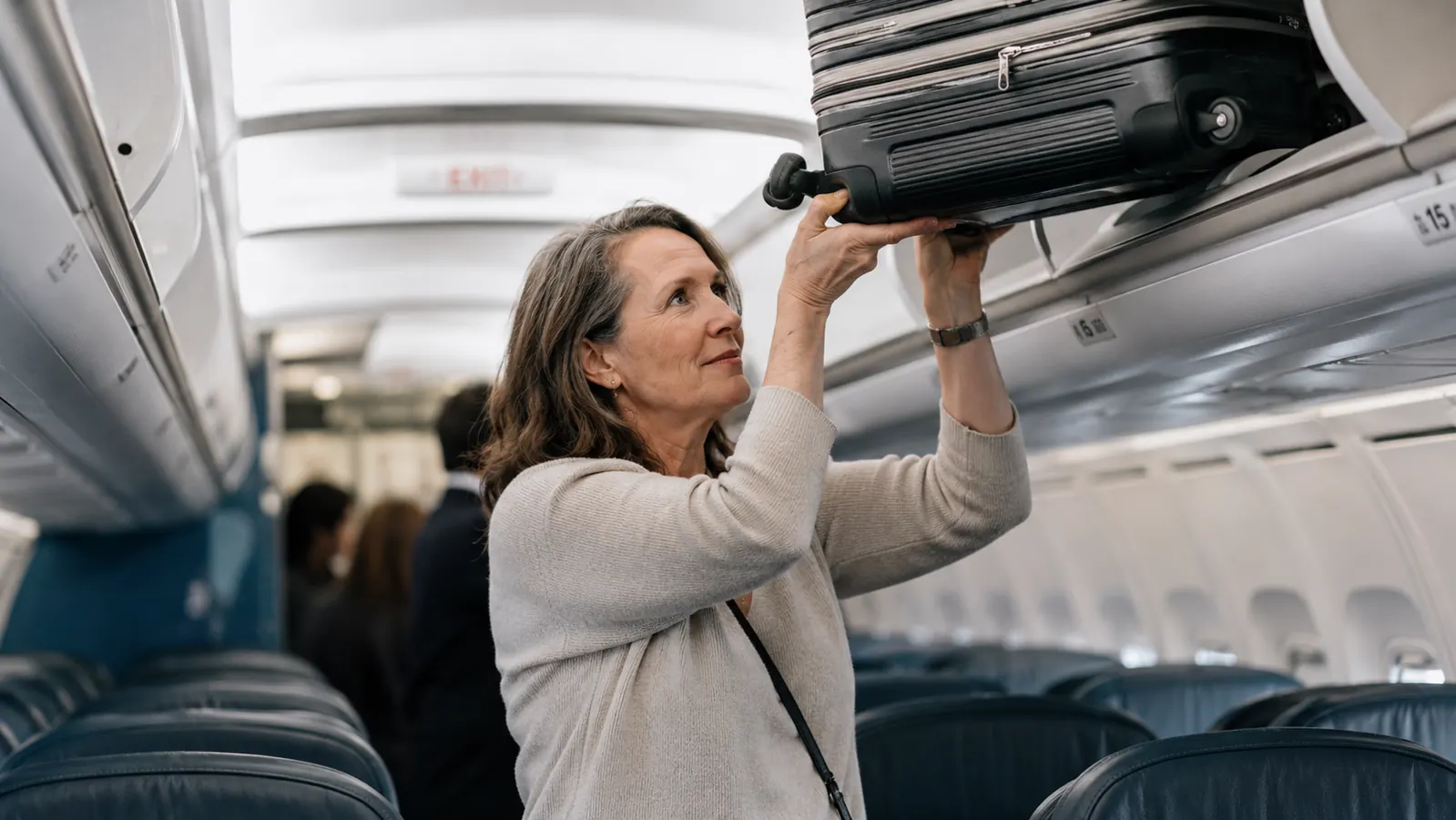
Ready to stop checking bags? The Veken set is where most frequent flyers start.
The full 9-piece compression set is available on Amazon with fast shipping. Eight months in, I would buy it again without hesitation.
Amazon Check Today's Price on Amazon →