I have been traveling internationally since I was 22. That is a lot of border crossings, a lot of customs lines, and more than a few moments where I had to stop and remind myself exactly which bag my passport was in. I have never lost one, but I have watched people lose theirs, and I can tell you it is not a quick fix. A lost or stolen passport abroad means a visit to your nearest embassy or consulate, a police report in a language you may not speak, and potentially several nights in a city you did not plan to stay in. The kind of trip story nobody wants.
The good news: document loss is almost entirely preventable. Not with expensive gadgets or paranoid behavior, but with a small system you set up once before you leave and maintain without thinking about it. This guide walks through every step of that system, including the ZOPPEN RFID Blocking Passport Holder that has been sitting in my carry-on for the last three years without a single problem. If you travel internationally more than once a year, this is the most useful 10 minutes you will spend before your next trip.
The passport wallet this whole system is built around costs less than a single airport meal.
The ZOPPEN RFID Blocking Passport Holder has over 20,000 Amazon reviews and holds your passport, cards, boarding pass, and SIM cards all in one slim organizer. It is what I carry every trip.
Amazon Check Today's Price on Amazon →Step 1: Make Copies of Everything Before You Leave Home
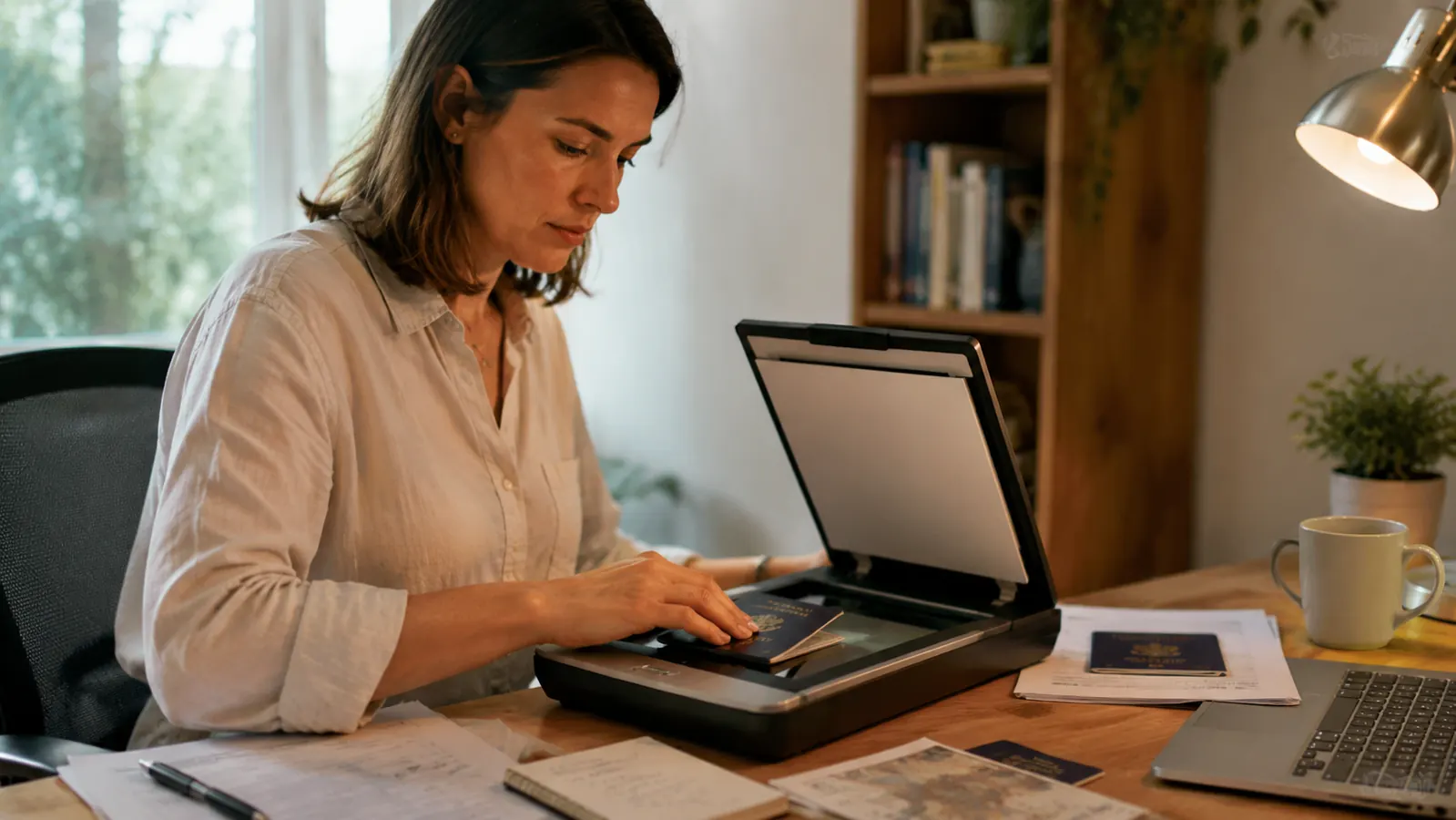
Before a single bag gets packed, make two sets of copies of your critical documents: your passport photo page, your driver's license, your travel insurance card, your visa (if you have one), and any hotel confirmation with an address on it. One set goes in your carry-on, separate from the originals. One set stays home with someone you trust, either a family member or a friend who knows you are traveling.
I also photograph the same documents on my phone and upload them to a password-protected cloud folder. If my phone gets stolen too, I can access them from any browser. This takes about 15 minutes at home. At a consulate in a foreign country, those same 15 minutes are worth hours of waiting in the wrong line. Some people overthink this step. Do not. It is just photos and a cloud folder.
One more thing on copies: write down your passport number separately from the passport itself. If the passport is stolen, you will be asked for that number before you even get to a consulate intake form. Knowing it speeds up every conversation that follows.
Step 2: Choose the Right Passport Holder and Actually Use It
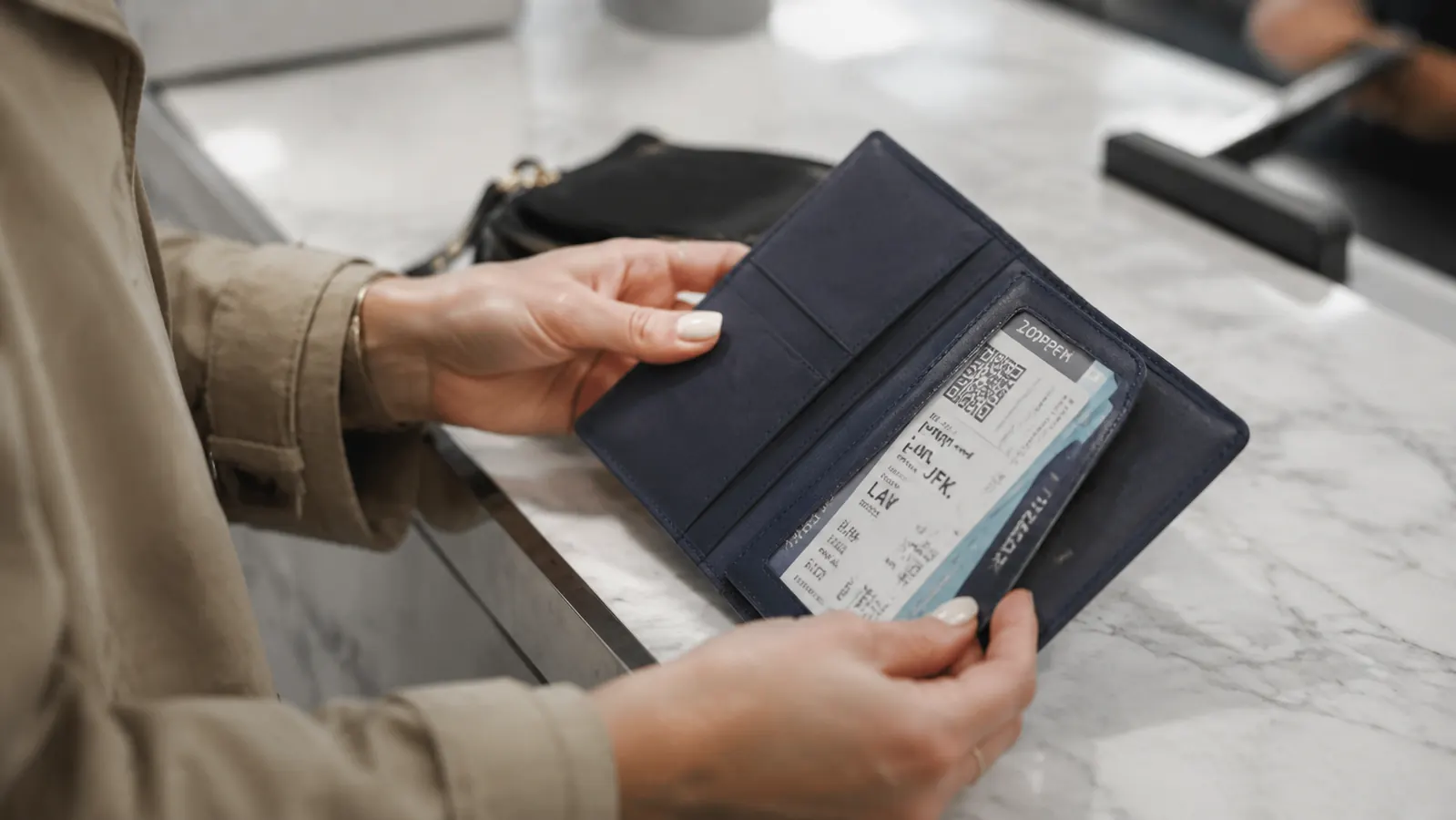
This is where most people's document security strategy either works or falls apart. A passport sitting loose in a day bag is a passport that can be pickpocketed, left on a seat, or lost in the shuffle of a busy transit hub. A passport in a dedicated holder, worn or carried in a consistent spot, is one you will always know the location of.
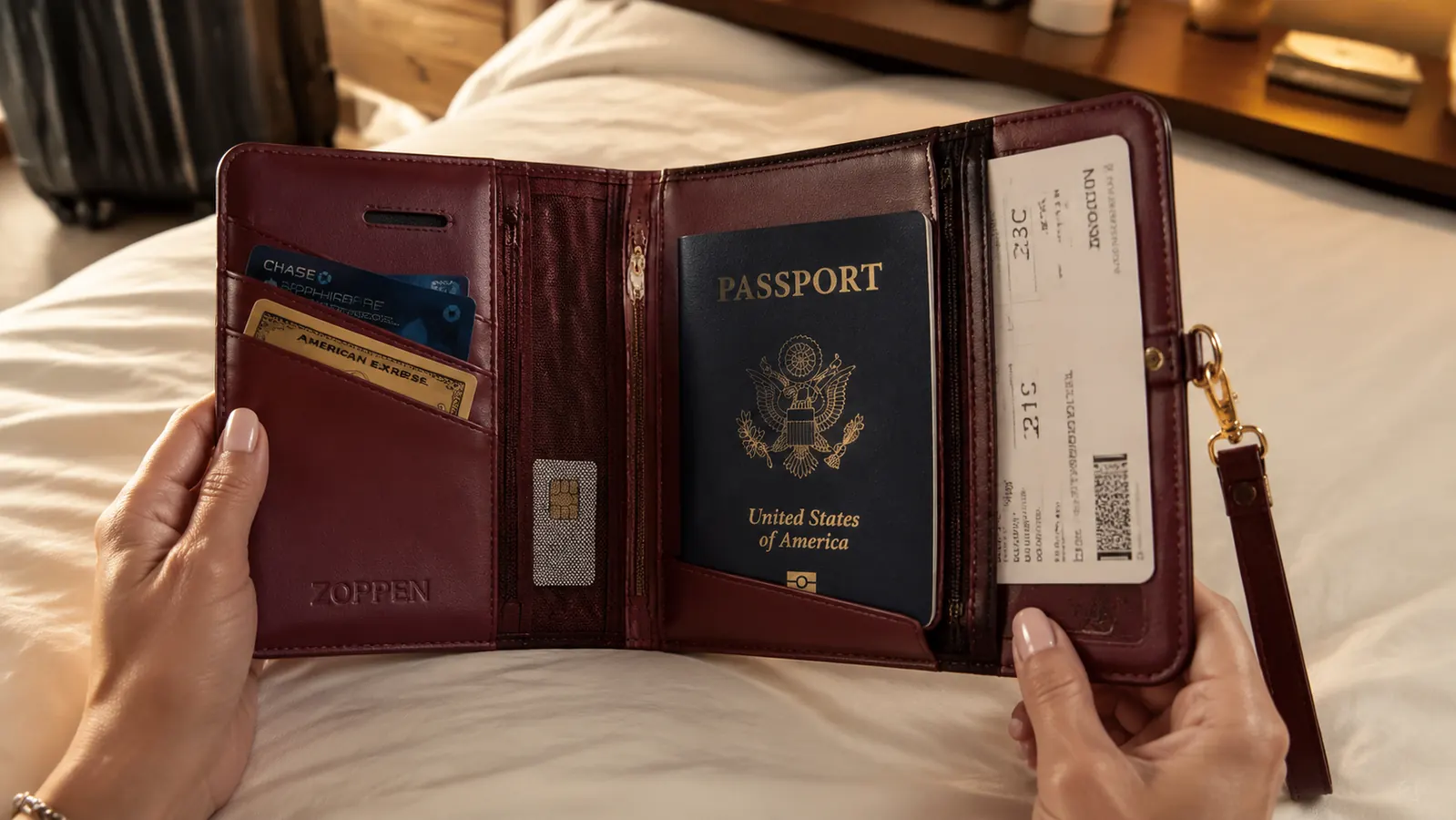
I carry the ZOPPEN Multi-Purpose RFID Blocking Passport Holder, and I have recommended it to more friends and family than I can count. What I like about it is that it consolidates everything. My passport goes in the main slip. My two travel credit cards go in the card slots. My boarding pass goes in the clear window sleeve. My spare SIM card goes in the mesh pocket. That is everything I need at any airport checkpoint or border crossing, all in one place, in one hand.
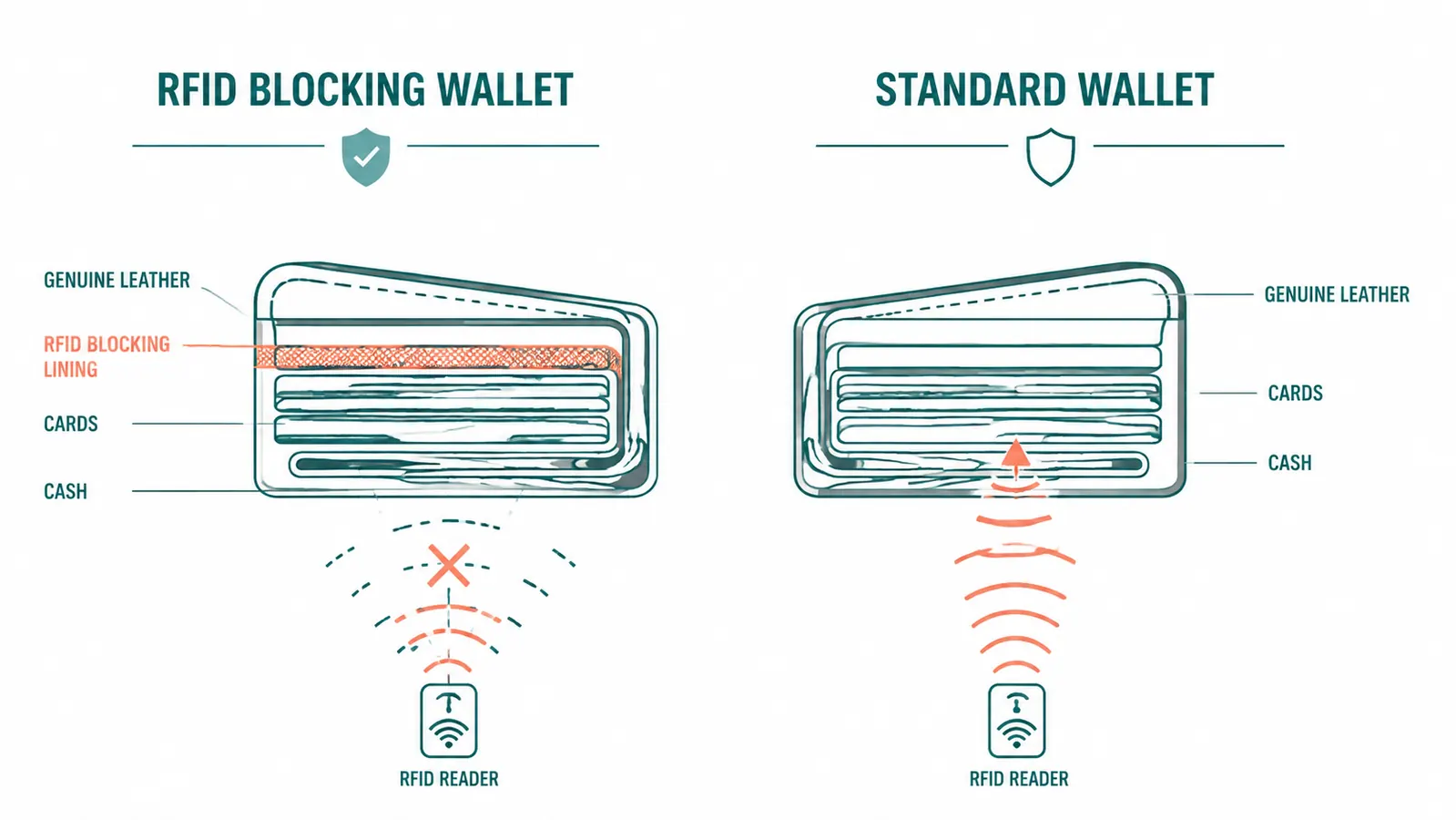
The RFID blocking is real protection against electronic skimming, where someone with a scanner walks close enough to read your card data without touching you. It is not the most common travel crime, but it costs nothing extra in a wallet at this price point, and it removes the risk entirely. The ZOPPEN is rated 4.5 stars across more than 20,000 Amazon reviews. That is not a fluke.
Step 3: Decide Where on Your Body Your Passport Travels
Having a good wallet is half the equation. Where you carry it is the other half. My general rule: the passport stays on my body in transit and in crowded public spaces, and it goes in the hotel safe when I am settled into a room for more than a few hours. The exceptions are border crossings and airport security, where you obviously need it in hand.
In transit, I wear a jacket with an interior chest pocket and the ZOPPEN wallet slides in there. No one can brush past me on a train platform and lift it. If I am in a warm destination without a jacket, I use a slim crossbody bag that stays in front of me, not behind. I have never owned a money belt because they slow you down at security and most pickpockets are not working at that level of patience. The goal is not to be paranoid, it is to make yourself a less convenient target than the person who shoved everything into a back pocket.
At the hotel, use the room safe for your passport if you are going out without it. If there is no room safe or you do not trust the lock, the front desk can usually secure valuables. What you do not want to do is leave your passport on a desk, in an unzipped bag, or in a jacket pocket hanging in an unlocked room.
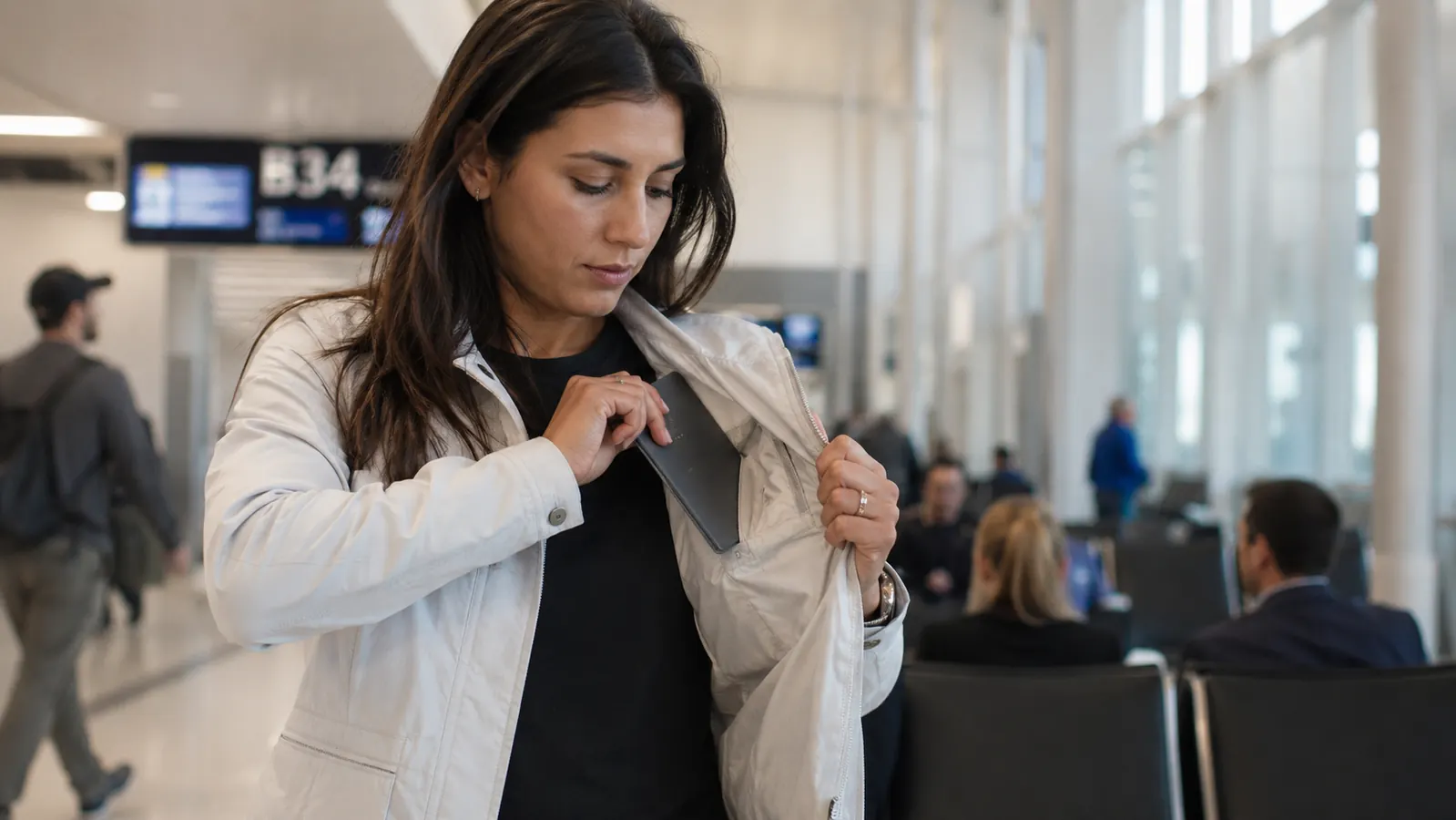
Step 4: Build a Checkpoint Habit at Every Transition
The most common way documents go missing abroad is not pickpockets, it is the traveler who set something down and walked away distracted. Security trays at airports, restaurant tables, taxi back seats, and hotel check-in desks are where passports get left. The fix is a physical habit I call the three-point check: every time you change locations, you touch your passport, your phone, and your wallet before you move. That is it.
I started doing this after a friend left her passport in a security tray in Heathrow. She caught it 30 feet later, but it shook her. After that trip she told me the three-point check had become automatic. She does it leaving every restaurant, every cab, every gate. It takes two seconds and it catches the moments when your brain is already at the destination.
The most common way passports disappear abroad is not theft. It is the traveler who set it down for a second and walked away. A two-second habit at every transition catches that every time.
Step 5: Know Exactly What to Do If Something Goes Wrong
Even with a good system, things happen. Luggage gets rifled. Bags get snatched. Knowing your recovery path in advance means you are making decisions from a plan, not from panic. Before every international trip, I note two things in my phone: the address and phone number of the nearest U.S. Embassy or consulate at my destination, and the emergency number for my travel credit card. These take two minutes to look up and they live in a note I can access offline.
If your passport is lost or stolen abroad, the sequence is: report it to local police and get a written report (you will need this), contact your embassy or consulate to begin the emergency passport process, and call your travel insurance provider to understand what expenses they cover while you wait. Emergency passports can sometimes be issued in 24 to 48 hours depending on your location and how busy the consulate is. Your pre-trip copies and your knowledge of your passport number will cut hours off that process.
Having your photocopies, your cloud backup, and a working travel card separate from your main wallet means you are not starting from zero. You are starting from behind, but there is a path. That is a very different feeling when you are standing at a consulate counter in a city you did not plan to spend three more nights in.
What Else Helps
Beyond the five steps above, a few additional practices have made my international travel feel genuinely relaxed on the security front. I always carry two different credit cards from two different banks, in two different parts of my bag, so one compromised card does not strand me. I use a VPN on public airport Wi-Fi to keep my banking logins and email from being intercepted. I keep a small cash reserve in local currency, usually the equivalent of about 40 to 50 US dollars, separate from my wallet, tucked in an inside bag pocket. That reserve has covered a cab and a meal twice when my card was temporarily blocked for unusual international activity. None of these things are complicated. They are just habits that experienced travelers build up over time, and the earlier you build them, the less stressful every trip after that becomes.
On RFID protection specifically: I want to give you an honest picture. Electronic skimming is a real threat, more documented in certain regions of Europe and Southeast Asia than in others, but not something every traveler will ever encounter. What RFID blocking does is close that specific vulnerability at zero extra cost when you are buying a passport wallet anyway. The ZOPPEN does it without adding bulk or complexity. If you are going to carry a passport holder regardless, and you should, there is no reason not to buy one with RFID shielding built in.
If you follow this system, your documents will be there every time you reach for them.
The ZOPPEN RFID Blocking Passport Holder is the organizing piece that makes the whole system easy to stick with. Passport, cards, boarding pass, and SIM cards in one slim wallet. Under ten dollars on Amazon, with over 20,000 reviews and a 4.5-star rating.
Amazon Check Today's Price on Amazon →