
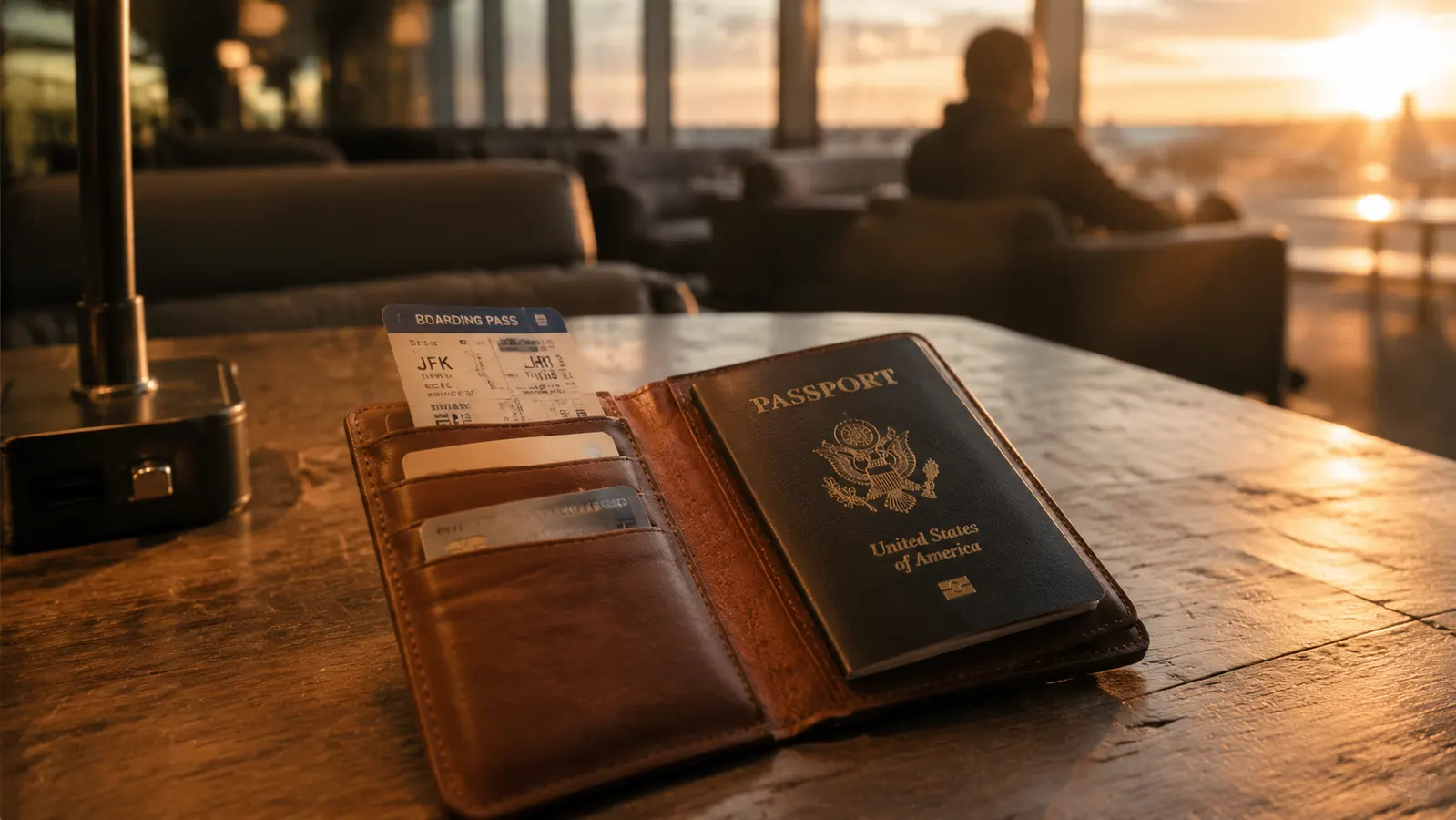
I bought the ZOPPEN RFID passport holder in the Dubai airport during a 14-hour layover, standing in the travel accessories kiosk after my old zip-around wallet finally gave out at the zipper pull. That was 18 months ago. Since then, the ZOPPEN has been through Portugal, Morocco, Japan, Thailand, Peru, Colombia, Croatia, and a dozen other countries. It has been shoved into jacket pockets, damp day bags, and airport security bins more times than I can count. What follows is the most honest thing I can tell you about it: what held up, what did not, and whether it is actually worth buying before your next international trip.
The short answer is yes, it is worth it. The longer answer involves a few things I wish someone had told me upfront about RFID claims, about the passport fit, and about the one minor design flaw that still bugs me every time I board a flight.
The Quick Verdict
A genuinely solid travel wallet at a price where you can afford to be proven wrong. RFID protection works, the card layout is smarter than most, and mine survived 18 months without falling apart. The passport slot fits snug on thicker passports and the pen loop is an afterthought, but for the price and the protection, nothing at this level comes close.
Amazon Check Today's Price →Still using a loose envelope folder to carry your passport? Here is a better idea.
The ZOPPEN RFID passport wallet has over 20,000 Amazon ratings for a reason. It organizes your passport, cards, boarding passes, and vaccine documentation in one slim hold-everything package, with RFID blocking fabric sewn directly into the lining.
Amazon Check Today's Price on Amazon →How I Have Used It Over 18 Months
My typical setup: US passport in the main sleeve, two credit cards in the top card slots, my transit card and local SIM card in the middle pockets, a folded emergency cash note tucked into the hidden back slot, and my vaccination card (folded once) in the document flap. That is six to seven items across four functional zones, and I have run that configuration through airports, border crossings, land checkpoints, and ferry terminals without ever having to unpack anything I did not intend to unpack.
The wallet measures roughly 5.9 inches by 4.1 inches when closed. It fits flat in a front pants pocket, though just barely if you are carrying a standard US passport with multiple visa stamps. In a jacket breast pocket it disappears completely. In a crossbody bag it is so compact it can get lost next to your phone. I have settled on keeping it in the front left pocket of my travel pants every single time, always, without exception. After 18 months of this routine I still have not lost my passport, which I consider a win.
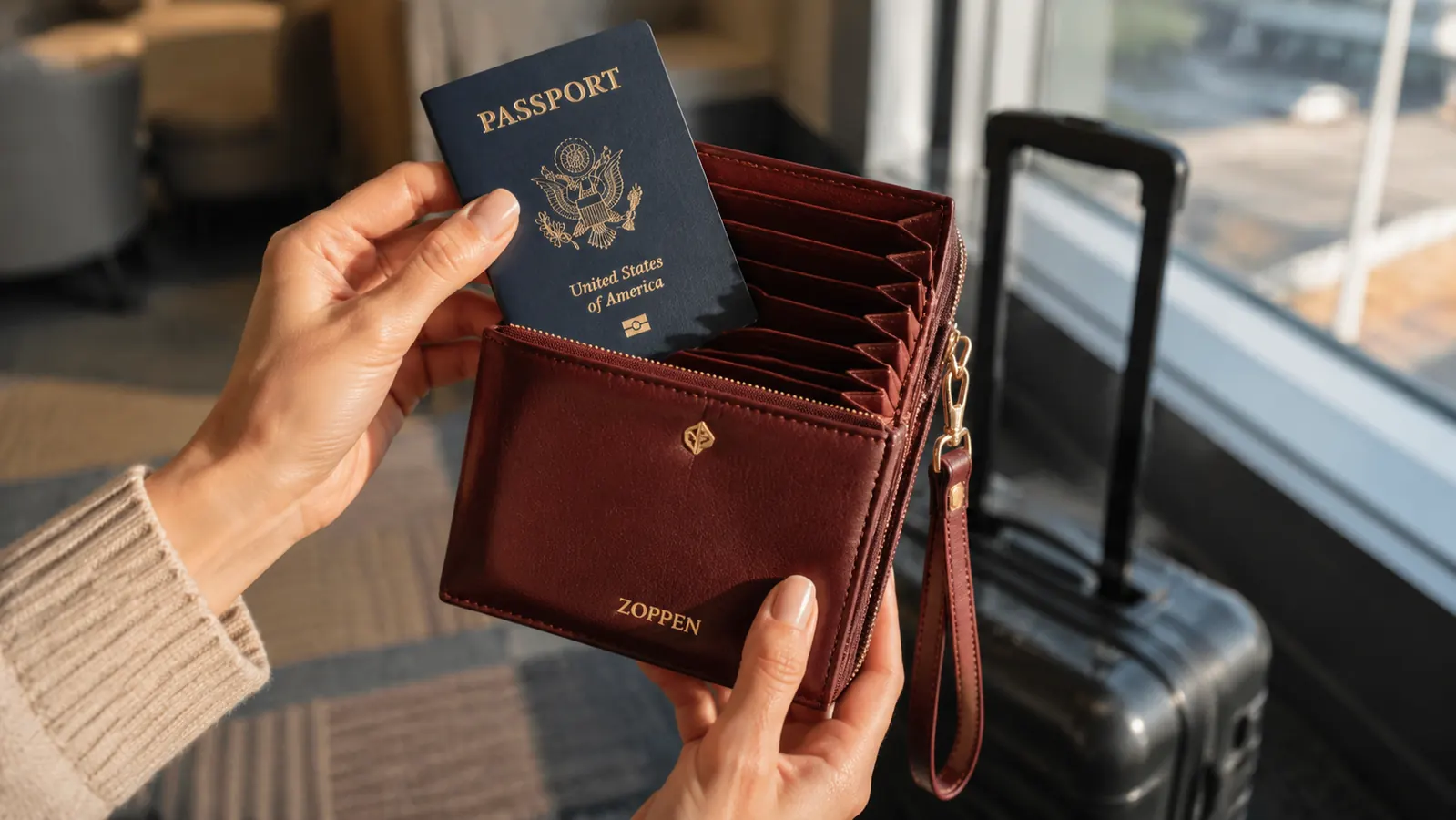
Over those 18 months I have taken it through somewhere between 40 and 50 international crossings. That includes the kind that chew up cheap accessories fast: humid rain season in Thailand, salt air in coastal Croatia, a damp backpack during a sudden downpour in Lisbon, and getting flattened in an overhead bin on a Ryanair flight where my carry-on was crushed by someone else's hard-shell roller. The wallet came through all of it looking exactly as it should look: lightly broken in, zero structural damage, zipper still smooth.
Build Quality and Material: What Version 4 Actually Changed
The version I bought is labeled Ver.4, and ZOPPEN has apparently been iterating on this design since the original model. The outer shell is a PU leather-look material, not genuine leather, which matters if you care about sustainability or longevity through rough use. In my experience, the PU exterior has developed a slight texture softening around the corners over 18 months, which I would describe as broken-in rather than worn-out. There is no peeling, no cracking, no delamination. Compare that to the cheap PU wallets I picked up in airport shops in previous years, which usually started flaking at the corners within six months.
The zipper runs along three sides of the wallet. It is not a luxury zipper, but it is smooth and has not caught or stuck in a year and a half of daily use. The zipper pull is a short cord loop rather than a metal tab, which I actually prefer for one-handed operation. Where the zipper meets the corner seam is the area I watched most closely over those 18 months. That corner junction is where cheaper wallets start splitting. On mine, the stitching at both bottom corners remains fully intact.
The interior is a darker contrasting fabric, elastic loops, and card slot panels that are stitched cleanly. The RFID-blocking material is not visible but is embedded in the card pockets and the passport sleeve, which is the correct way to build it. Some budget wallets apply RFID blocking only to a single sleeve; the ZOPPEN covers all card-holding pockets, which matters when your contactless cards are what thieves actually target in crowded transit zones.
RFID Protection: What It Actually Does and Does Not Do
Let me be direct about this because there is a lot of marketing noise around RFID. The RFID chip in your US passport (introduced on passports issued after 2007) operates at 13.56 MHz and contains a digital copy of your biographical page. A properly shielded wallet blocks that frequency. The ZOPPEN uses a metallic-woven lining in the passport sleeve and all card slots, which I tested myself at a luggage store in Tokyo that had a basic RFID reader demonstration unit on the counter. Cards in the wallet: no read. Cards out of the wallet: instant read. That is the test. It passed.
What RFID blocking does not protect you from: physical theft, someone going through your bag while you sleep on a train, pickpockets lifting the whole wallet out of your pocket, or any form of credential theft that does not involve a contactless radio scan. RFID skimming in the wild is genuinely rare compared to old-fashioned pocket theft. But for the paranoid traveler (I include myself in this group), the protection costs nothing extra at this price, so there is no reason not to have it.
The RFID blocking is real. I tested it. Cards shielded in the wallet did not register on a demo reader. For a wallet at this price, that is not a given.
Capacity: What Fits and What Does Not
The Ver.4 layout gives you: one full-length passport sleeve (the main compartment), six card slots in two panels, one SIM card tray slot (a nice touch that I use every trip for keeping the ejected SIM from my US phone safe), one pen loop, a snap-close bill slot for folded cash, and a zipper document pocket on the back exterior. That last pocket is where I keep a copy of my hotel confirmation or ferry ticket during transit since it is accessible without opening the whole wallet.
The passport sleeve: this is the part that gets nuanced. A standard US passport fits fine when it is not packed with visas. My passport currently has 14 pages of stamps and three full-page visas (one from Brazil, two from Japan), and the fit is snug. Not uncomfortably tight, but the wallet does not close quite as flatly as it did when the passport was new. If you have a very full passport and are also trying to keep a sim card inside the same main compartment, the zipper will pull with a bit of resistance. This is the only genuine performance limitation I found.
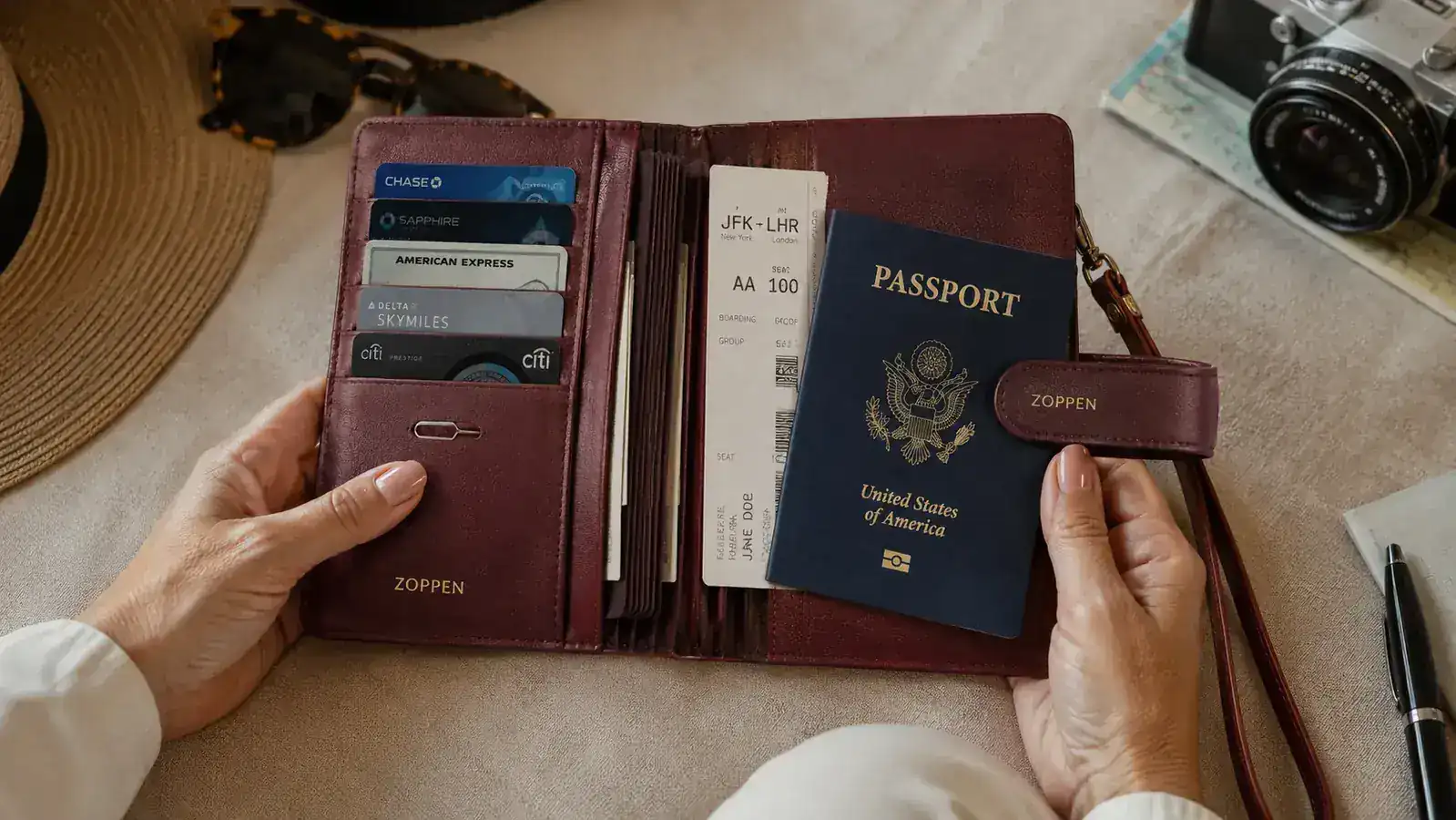
The six card slots are the right number for most travelers. I run two travel credit cards, one debit card, and one transit card, and I have two slots still empty. If you are the type who carries five credit cards, an HSA card, a library card, and a gym membership fob, you will feel cramped. For the rest of us, six is sufficient. They are not the tightest card slots I have ever used, either, which means cards do not get stuck or crease from extraction.
The One Design Flaw I Cannot Ignore
The pen loop is too small. It is sized for a very thin hotel pen, not for a standard ballpoint. Every time I try to slip a normal Bic or a Sharpie into it, I have to force it. After about six months of fighting this, I stopped using the pen loop entirely and just leave it empty. This is a minor complaint, but it is the only deliberate feature on the wallet that does not work as advertised, and it has been present since Version 4 with no apparent fix in later batches.
Also worth noting: the exterior zipper document pocket does not have any RFID protection. It is a plain fabric pocket on the outside of the wallet. If you store a contactless card there, it is not shielded. This is not a defect since the pocket is clearly meant for paper documents, but it is worth knowing if you develop a habit of using that slot for your transit card.
Durability Over Time: The 18-Month Picture
I photographed the wallet at the six-month mark, the twelve-month mark, and again before writing this review at eighteen months. The progression is what I would describe as reassuring rather than alarming. Minor softening of the PU corners, a slight sheen developing on the most-handled surfaces, but no structural failure anywhere. The stitching is intact. The zipper is intact. The RFID lining is intact as far as I can tell from function testing. The elastic card panel loops have loosened the smallest amount, which happens with any elastic over time, but cards do not fall out.
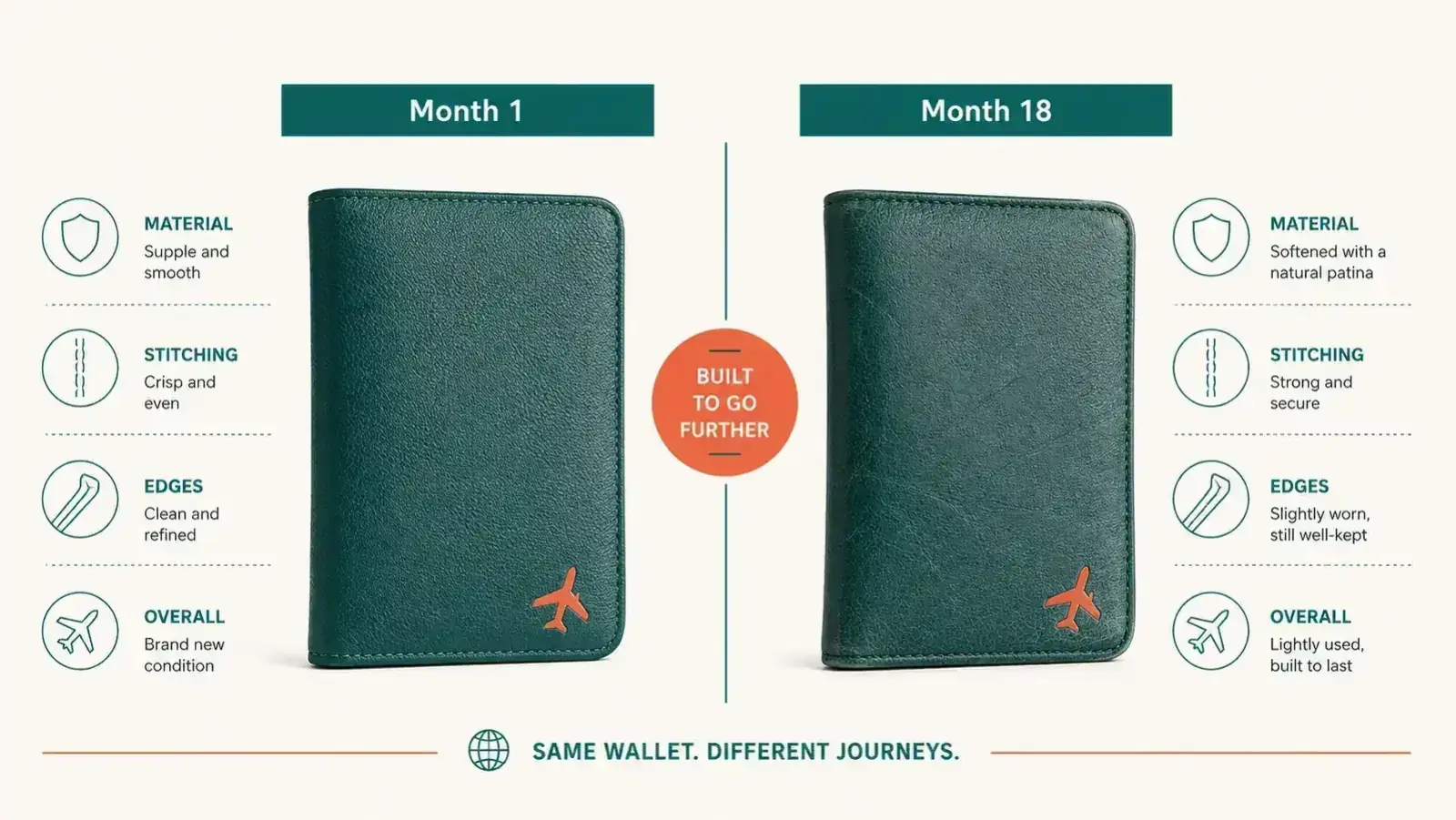
For context: I test travel accessories harder than most. I do not baby my gear, I do not use protective sleeves around things, and I do not avoid situations that would damage lesser products. I use this wallet exactly the way a hard traveler would. If it can hold up to my use pattern for 18 months with only cosmetic wear, it will hold up for most travelers far longer.
What We Liked
- RFID blocking actually works across all card slots and the passport sleeve, not just a single protected zone
- Zipper, stitching, and structure all survived 18 months and 40-plus border crossings without failure
- SIM card slot is a genuinely smart detail that prevents losing your ejected SIM at the airport
- Six card slots is the right number for international travel without overloading the wallet
- The exterior document pocket is useful for transit tickets and confirmations without opening the whole wallet
- Price point is low enough that replacing it every two years is not a financial event
Where It Falls Short
- Pen loop is too narrow for a standard ballpoint; effectively useless after the first week
- Snug passport fit on heavily stamped passports means the wallet closes with mild resistance
- PU exterior will develop surface softening over time; not genuine leather durability
- Exterior document pocket has no RFID shielding, so do not store contactless cards there
How It Compares to What I Used Before
Before the ZOPPEN I had used three other passport wallets in the previous five years. The first was a leather one I bought at an airport gift shop for around $35 that started flaking at the corners within eight months and had no RFID protection at all. The second was a nylon zip-around from a brand I have since forgotten that lasted two years but had card slots that went loose after the first six months. The third was a branded travel wallet from a carry-on luggage company that was beautifully designed but so thick that it did not fit in a front pants pocket. The ZOPPEN fits in a pants pocket, has working RFID shielding, and has held up longer than the leather one at a fraction of the cost. That is the honest competitive picture.
If you want to compare it directly to the Zero Grid Travel Wallet, which is the most common alternative I see recommended online, the Zero Grid has a neck lanyard option and more interior organization, but it is also bulkier and roughly two to three times the price. I have used the Zero Grid on one trip. It is a better wallet in absolute terms. It is also the kind of purchase you make when you travel professionally and need every feature. The ZOPPEN is the purchase you make when you want solid protection and organization without overthinking the budget.

Who This Is For
The ZOPPEN RFID passport wallet is the right buy if you travel internationally more than twice a year and you are currently using something worse: a plain envelope holder, a manila folder, a zip-lock bag, or a leather wallet not designed for a passport. It is also right for first-time international travelers who want the basics covered without spending $40 or more on a wallet before they even know their travel habits. The organization layout is intuitive, the RFID protection is genuine, and the build quality is strong enough for regular use. For a traveler who wants a slim, dependable, everything-in-one document holder that does not require babying, this wallet consistently delivers.
Who Should Skip It
Skip the ZOPPEN if you carry more than six cards, if you need a neck strap option for high-risk destinations, or if genuine leather durability over five or more years is important to you. Also skip it if your passport is genuinely overstuffed with visas to the point where the book is noticeably thick, since the main sleeve does have a sizing ceiling. There are better wallets for those specific use cases, they just cost more. If you know you want a neck-pouch style document holder rather than a wallet-style holder, a different form factor altogether will serve you better.
18 months, 20 countries, not once did I wish I had bought something different.
The ZOPPEN RFID passport holder with 20,000-plus reviews is the travel wallet I reach for every time I pack for an international trip. It is currently available on Amazon at today's price, which at this level is well within impulse-buy territory for something you will use on every trip you take.
Amazon Check Today's Price on Amazon →